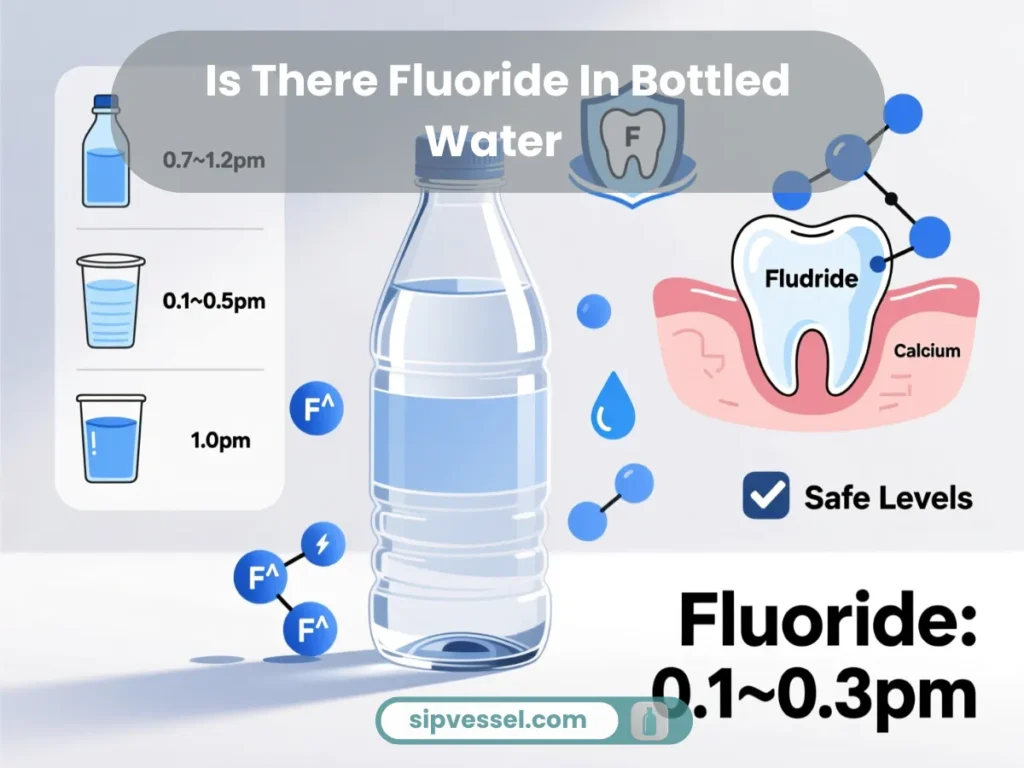
Fluoride in bottled water is something most people don’t think about, but it matters more than many realize. Because fluoride levels vary from brand to brand, understanding how much fluoride is inside your bottled water can help you make better choices for your health. Whether it is naturally occurring or added during processing, fluoride plays a bigger role in hydration than most consumers know.
In this article, we will find out how fluoride levels differ among bottled water brands and whether drinking it is truly safe for you and your family.
Table of Contents
ToggleFor more hydration tips, you can check our guide on Water Bottle With Straw.
Benefits of a Fluoride in Bottled Water
Helps You Make Safer Drinking Choices
Understanding fluoride in bottled water gives you the power to choose brands that match your health needs. When you have the right knowledge, it becomes easier to avoid high-fluoride products and select options that fit your lifestyle. This helps you drink water with confidence instead of guessing what’s inside.
By knowing which brands contain more fluoride and which contain less, you make smarter hydration decisions every day. This benefit becomes especially important for kids, pregnant women, or anyone sensitive to fluoride.
Improves Awareness of Hidden Water Ingredients
Most bottled water labels mention minerals, but they rarely explain fluoride clearly. Learning about fluoride in bottled water helps you understand what you are really drinking. You’ll discover how natural minerals, purification methods, and water sources affect fluoride levels.
This awareness helps protect you from consuming too much fluoride without knowing it. It also prepares you to compare brands more accurately when shopping.
Guides You in Selecting Fluoride-Free Brands
One major benefit of learning about fluoride in bottled water is knowing which brands are naturally fluoride-free. With this knowledge, you can create a healthier daily routine by choosing water that suits your needs. Some people prefer zero-fluoride brands for medical or personal reasons, and having the right information makes choosing easier.
By being aware of fluoride-free options, you build a safer hydration habit that gives you peace of mind.
What Is Fluoride in Bottled Water
Why Does Fluoride Appear in Bottled Water?
Fluoride in bottled water can come from natural water sources or the processing system used by the brand. Many types of water, like spring water or artesian water, come from underground places that naturally contain fluoride. This happens because fluoride minerals dissolve into water as it travels through rocks and soil.
Some bottled water brands also use purification steps that may reduce or increase fluoride. While most brands don’t add fluoride, a few might use city water that already contains it. This is why some bottled water has fluoride and some doesn’t.
Is Fluoride Added or Naturally Occurring?
In most cases, the fluoride in bottled water is naturally occurring. Spring and mineral water sources often carry small amounts of fluoride. These levels differ depending on the location of the water source.
Very few bottled water companies add fluoride on purpose. If they do, they are required to mention it on the label. Natural fluoride levels are generally low, but some brands may have higher levels depending on their source.
How Much Fluoride Is in Bottled Water Brands
Fluoride Levels in Popular Bottled Water Brands
Different bottled water brands have different amounts of fluoride. Some brands, especially purified or reverse-osmosis types, have almost zero fluoride. Other brands, especially natural spring water, may contain higher amounts.
Knowing these differences helps you choose the right brand based on your needs. Some consumers prefer fluoride-free bottled water, while others are fine with small natural amounts.
Comparing Bottled Water vs Tap Water Fluoride
Tap water in many countries has added fluoride to help protect teeth. Bottled water usually does not add fluoride unless stated. This means bottled water often has less fluoride than tap water.
However, spring water can sometimes have more fluoride naturally than tap water. So bottled water isn’t always the low-fluoride choice people expect.
You can also explore our article on Lululemon hydration bottle.

Is Fluoride in Bottled Water Safe
Effects of Fluoride on Teeth and Bones
Fluoride can be good in small amounts. It helps strengthen tooth enamel and can prevent cavities. This is why some drinking water supplies add fluoride to the system.
But too much fluoride may cause dental problems such as white spots or discoloration on teeth. In very high amounts, it may affect bones. This makes it important to understand the fluoride in bottled water you drink regularly.
Risks of High Fluoride Exposure
High fluoride exposure over time can lead to a condition called fluorosis. This usually happens when fluoride intake is too high during childhood. Adults may also experience bone issues if they consume too much fluoride for many years.
This doesn’t mean fluoride is unsafe — it simply means moderation is important. That is why checking fluoride levels in bottled water is useful.
Does All Bottled Water Contain Fluoride
Types of Water With Natural Fluoride
Some types of bottled water naturally contain fluoride. These include spring water, mineral water, and artesian water. When water comes directly from underground, it collects minerals from the earth.
These minerals can be healthy in small amounts. But for people who prefer low-fluoride options, these natural sources may not be ideal.
Purified and Reverse Osmosis Options
Purified water, distilled water, and reverse-osmosis water usually contain the least fluoride. This is because the filtration systems remove most minerals, including fluoride.
These waters are best for babies, people with health concerns, or anyone avoiding fluoride. They are also more consistent since the purification process is controlled.
Best Bottled Water Without Fluoride
Popular Fluoride-Free Brands
Some well-known bottled water brands offer fluoride-free products. These brands use purification processes that remove fluoride. If you prefer water without fluoride, these options are usually the best.
However, not all products by the same brand are fluoride-free. Always check the label or brand website for fluoride content.
How to Check Labels for Fluoride Content
Many bottled water labels list mineral content, but not all list fluoride. If fluoride is added, companies must mention it. If it’s natural fluoride, they may or may not include it.
The best way to be sure is to check the brand’s water quality report. Many companies publish these online.
Bottled Water Fluoride Chart
Below is a simple example of how fluoride levels vary:
| Brand Type | Approx Fluoride Level |
|---|---|
| Reverse Osmosis Water | 0.0–0.1 ppm |
| Purified Water | 0.0–0.3 ppm |
| Spring Water | 0.1–1.0 ppm |
| Mineral Water | 0.2–1.5 ppm |
This table gives a general idea, but every brand is different.
Is Fluoride in Bottled Water Safe for Kids
Recommended Fluoride Intake for Children
Children need fluoride for strong teeth, but not too much. Kids who drink a lot of fluoridated water may develop dental fluorosis, which causes white marks on teeth. For this reason, parents should check fluoride levels in bottled water before giving it daily.
Baby formula already contains minerals, so choosing low-fluoride bottled water is often safer.

Best Bottled Water for Babies and Toddlers
For babies, dentists often recommend fluoride-free or very low-fluoride water. Their teeth are still forming, and too much fluoride can affect them quickly. Many purified bottled water brands are ideal for babies because they contain almost no fluoride.
Parents should always check labels or ask doctors if unsure.
Video content created by American Dental Association. All rights reserved. This video from YouTube is shared here for informational purposes only to support the content of this article. All rights belong to the original creator.
Personal Experience
Discovering Fluoride Levels in Brands I Used
When I first learned about fluoride in bottled water, I was surprised. I didn’t know that the brands I drank daily had different fluoride levels. Some brands I thought were “cleaner” actually had more fluoride than others.
This made me curious and pushed me to explore the fluoride content in all the bottled water I used.
How Switching to Low-Fluoride Water Helped
After switching to a low-fluoride brand, I felt more confident in my daily hydration. My bottled water choices became more intentional. I liked knowing exactly what minerals I was drinking each day.
This experience helped me understand why learning about fluoride in bottled water is useful.
Frequently Asked Questions
Does bottled water actually have fluoride in it?
Yes, some brands do. Fluoride in bottled water depends on the source—spring water may have natural fluoride, while purified water usually has none.
Which bottled water brands have the lowest fluoride?
Brands that use reverse osmosis or distillation almost always have the lowest fluoride. Many purified waters are 0.0–0.2 ppm.
How can I check fluoride levels in bottled water?
Look at the brand’s Water Quality Report on their website. If fluoride is added, it must appear on the bottle label.
Is fluoride in bottled water safe to drink every day?
Yes, if the levels are low. Most bottled water has fluoride under recommended limits, but very high levels aren’t ideal long-term.
Why is there fluoride in bottled water if it’s supposed to be pure?
Natural spring sources contain minerals, including fluoride. Purified bottled water removes most, but not always all, fluoride.
Does bottled water have more fluoride than tap water?
Usually no. Tap water in many cities has added fluoride, while most bottled water doesn’t add any unless labeled.
Can too much fluoride in bottled water cause health problems?
Yes, long-term high fluoride intake may cause dental fluorosis or, rarely, bone issues. This is why moderation matters.
What bottled water is safe for babies when it comes to fluoride?
Fluoride-free or very low-fluoride purified water is usually safest for babies, especially when mixed with formula.
Does reverse osmosis bottled water remove fluoride completely?
Yes, reverse osmosis removes almost all fluoride, making it one of the best fluoride-free options.
How do I know if my bottled water has added fluoride?
If fluoride is added, the label must clearly say “fluoride added.” If not listed, it’s usually natural or very low.
Conclusion
Fluoride in bottled water is easy to overlook, but understanding it helps you choose safer and healthier brands. Since every water brand contains different fluoride levels, learning about labels, natural minerals, and purification methods gives you more control over your hydration choices. With this knowledge, you can avoid unwanted fluoride and pick the best water for your family.
By staying aware of what you drink, you protect your health, improve your daily routine, and avoid hidden ingredients in your bottled water. Making small but informed choices creates a bigger impact over time, especially when it comes to fluoride in bottled water.
Before you go, don’t miss our helpful post on Poland Spring Water Bottles.

John Bobo is an author who enjoys sharing ideas, stories, and insights with readers. He writes to inspire, inform, and connect with people through his work.