Keeping your bottle fresh is simple when you understand How To Clean Stainless Steel Water Bottle properly. Many people rinse their reusable bottles, but they often forget that bacteria, odors, and residue can still accumulate inside. Stainless steel lasts a long time, but only when cleaned with the right techniques that protect its surface and keep your water safe.
In this article, we will explore the easiest, safest, and most effective ways to keep your stainless steel bottle clean, odor-free, and fresh every day.
Table of Contents
ToggleBenefits of Reading About How To Clean Stainless Steel Water Bottle
You Learn Safe and Effective Cleaning Methods
Reading about How To Clean Stainless Steel Water Bottle teaches you simple techniques that keep your bottle germ-free without damaging the metal. You understand which products work best and which ones you should avoid.
You Prevent Odor, Stains, and Mold
This guide helps you avoid common problems like bad smells, yellow stains, or mold growth. Knowing the right routine keeps your bottle fresh and safe for daily hydration.
You Improve Your Overall Bottle Hygiene
When you know proper cleaning methods, your drink tastes better and stays pure. You also make your bottle last longer by maintaining the stainless steel interior correctly.
What Is the Best Way To Clean a Stainless Steel Water Bottle
Why Cleaning Stainless Steel Bottles Matters
A stainless steel bottle keeps water cool, fresh, and safe, but it can still collect germs and odors. Even if water looks clean, bacteria can hide inside the narrow spaces and form buildup. Regular cleaning stops these problems before they grow.
Keeping the surface free from residue also improves taste. A clean bottle means pure, clean water every time you drink.
Daily vs. Deep Cleaning
Daily cleaning removes surface germs and keeps the bottle fresh. It only takes a quick wash with mild soap and warm water. Deep cleaning, however, removes stubborn odors, stains, and hidden dirt. Deep cleaning once a week is enough for most people.
Some people ask if daily cleaning is necessary — yes, it helps maintain hygiene and flavor.
How To Clean Stainless Steel Water Bottle With Baking Soda and Vinegar
Step-by-Step Guide
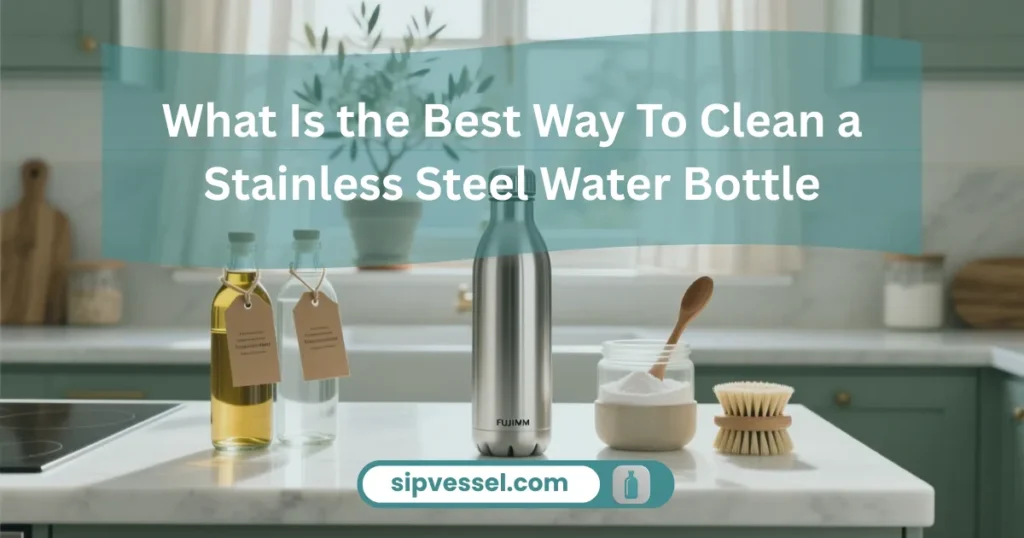
Baking soda and vinegar are natural cleaners that work perfectly for stainless steel. First, add two tablespoons of baking soda inside the bottle. Then pour warm vinegar until it forms bubbles. Let it sit for a few minutes so the reaction loosens dirt.
After soaking, scrub gently using a bottle brush and rinse with warm water. This removes odors and kills bacteria safely.
Does Vinegar Damage Stainless Steel?
Vinegar is safe for stainless steel when used correctly and rinsed after cleaning. Leaving vinegar inside for too long is not recommended because it can slowly dull the shine. Always rinse well to protect the bottle’s surface.
How Do You Remove Odor From a Stainless Steel Water Bottle
Removing odor from a stainless steel water bottle is easy when you use natural cleaning methods that neutralize smell-causing bacteria. The best way is to add 2 tablespoons of baking soda inside the bottle, fill it halfway with hot water, shake gently, and let it sit for at least 4–6 hours or overnight. Baking soda absorbs odor naturally and safely.
For stronger smells, fill the bottle with warm water and add ½ cup vinegar. Let it bubble for a few minutes, then scrub with a bottle brush. Rinse well to remove the vinegar scent. Always clean the lid, gasket, and straw, because odor often hides in these parts. Finally, leave the bottle open to air-dry completely to prevent smells from returning.
Natural Odor-Removal Methods
Odor often comes from trapped bacteria or leftover drinks. Fill the bottle with hot water and two tablespoons of baking soda. Shake gently and leave it overnight for best results. Baking soda absorbs odors naturally.
Another method is lemon juice and warm water. Lemon cleans naturally and gives a fresh scent without chemicals.
When Your Bottle Still Smells After Cleaning
If the smell remains, check the rubber ring or lid gasket. These parts hide bacteria. Remove the ring and clean it separately. Replace it if it stays smelly even after soaking.

How To Clean Mold Inside a Stainless Steel Water Bottle
Safe Ways To Kill Mold
Mold forms when moisture stays trapped inside a closed bottle. To remove mold safely, fill the bottle with hot water and add a tablespoon of vinegar and baking soda. The mixture kills mold naturally without scratching the steel.
Use a long bottle brush to reach all the corners. Make sure to clean the lid and straw as well.
Preventing Mold Growth
Always dry your bottle with the cap open after washing. Leaving it closed holds moisture and helps mold grow again. A simple airflow prevents this completely.
Avoid storing sugary drinks because they create sticky residue that mold loves.
How To Remove Stains From Inside Stainless Steel Bottles
Why Stains Appear
Stains can appear from coffee, tea, fruit water, or minerals in tap water. They leave marks on the stainless steel interior over time. These stains don’t harm the bottle, but they affect taste and smell.
Stains are common in bottles not cleaned daily. Residue sticks to metal and becomes harder to remove later.
Methods To Fix Discoloration
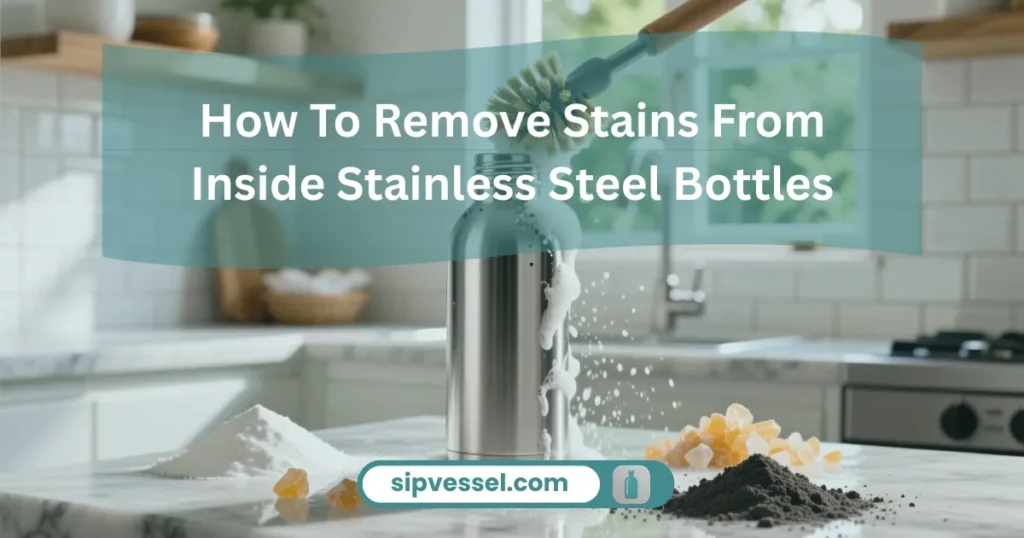
To fix stains, mix baking soda with a small amount of water to make a thick paste. Apply the paste inside the bottle with a brush. Scrub gently and rinse.
For deeper stains, add warm vinegar and baking soda and let it sit overnight.
How To Clean Stainless Steel Water Bottle Without Chemicals
Natural Alternatives
If you prefer chemical-free cleaning, use simple items like lemon, vinegar, and baking soda. Lemon juice removes odor, vinegar disinfects, and baking soda scrubs safely.
These methods are gentle and safe for children’s bottles too.
Does Lemon Clean Stainless Steel
Yes, lemon cleans stainless steel beautifully. It removes stains, kills germs, and leaves a fresh scent. It does not harm the steel when rinsed well.
Can You Put Stainless Steel Water Bottles in the Dishwasher
What Parts Are Dishwasher-Safe
Some stainless steel bottles are dishwasher-safe, but many are not. Bottles with paint, insulation, or special coatings may get damaged. Always check the bottom for dishwasher symbols before washing.
The lid, straw, and rubber rings are usually safe to wash separately.
Handwashing vs. Dishwasher
Handwashing is always safer because it protects the insulation and keeps the bottle looking new. Dishwashers use high heat that may harm seals and gaskets.
For more hydration tips, you can check our guide on How To Clean Hydrogen Water Bottle.
How To Deep Clean a Stainless Steel Water Bottle at Home
Using Hot Water Cleaning
The easiest deep cleaning method is to fill the bottle with boiling water and let it cool. Hot water kills germs and loosens residue naturally. Add a teaspoon of baking soda for extra cleaning power.
Shake gently, let it sit, then rinse thoroughly.
Using Bottle Brushes Correctly
A bottle brush with soft bristles works best. It reaches corners where bacteria hide. Avoid metal brushes because they can scratch the stainless steel surface.

How To Clean the Lid and Straw of Stainless Steel Bottles
Hidden Spots Where Bacteria Grow
The lid has small spaces that trap bacteria easily. Rubber rings, silicone seals, and crevices need regular cleaning to stay safe. Even if the bottle is clean, a dirty lid can make water smell bad.
Take the lid apart whenever possible and wash each part separately.
How To Remove Rubber Rings and Gaskets
Use your fingers to gently pull the gasket out. Soak it in warm water with vinegar for five minutes. Rinse well and let it dry. This keeps the bottle leak-proof and germ-free.
How Often Should You Clean a Stainless Steel Water Bottle
Daily Cleaning Routine
Wash your bottle daily if you use it for water. Use mild soap and warm water. Shake well and rinse until no soap smell remains. This prevents buildup and tastes better.
Dry it upside down with the cap off to avoid mold.
Weekly Deep Clean
A deep clean once a week removes hidden germs and odor. Use baking soda and vinegar or hot water soaking. This keeps your bottle fresh long-term.
Cleaning Mistakes To Avoid With Stainless Steel Bottles
Products That Damage Stainless Steel
Avoid bleach, strong chemicals, or cleaners with harsh abrasives. These can scratch the interior or remove protective layers. Stainless steel needs gentle cleaning.
Strong scents like perfume-based dish soap can also affect the taste of water.
Habits That Cause Odor and Mold
Leaving water inside for too long leads to stale smells. Keeping the bottle closed when it’s still wet causes mold quickly. Always rinse and dry properly after use.
Sugary drinks also create sticky residue that grows bacteria fast.
Personal Experience
When I first started using a stainless steel water bottle, I didn’t know how quickly odor and stains could build up. Learning How To Clean Stainless Steel Water Bottle properly helped me understand the importance of daily washing and weekly deep cleaning. Once I switched to natural cleaning methods, my bottle stayed fresh much longer.
After using the right cleaning steps, I noticed the taste of my water improved instantly. There was no metallic smell, and the bottle felt new each time I used it. Cleaning became easier, and I felt more confident staying hydrated every day.
Frequently Asked Questions
How often should I clean my stainless steel water bottle?
You should wash your bottle daily with warm water and mild soap to prevent odor and bacteria buildup, and do a deep clean weekly using baking soda or vinegar.
Can I use bleach to clean my stainless steel water bottle?
No. Bleach and harsh chemicals can damage the protective layer of stainless steel and leave harmful residues. Use natural cleaners like baking soda, lemon, or vinegar.
Is it safe to put my stainless steel water bottle in the dishwasher?
Only if the manufacturer specifies it’s dishwasher-safe. Handwashing is generally better to protect insulation, gaskets, and prevent odors.
Why does my stainless steel water bottle still smell after cleaning?
Odor usually comes from hidden areas like the lid, straw, or rubber gasket. Remove and clean these parts thoroughly to eliminate persistent smells.
How do I remove strong odor from my stainless steel water bottle?
Use baking soda or white vinegar with warm water, let it sit for several hours, scrub with a bottle brush, and rinse. This neutralizes odors naturally.
Can lemon juice remove odor from a stainless steel bottle?
Yes. Lemon juice is a natural deodorizer. It removes bacteria, leaves a fresh scent, and is safe for children’s bottles.
How can I prevent mold from growing inside my stainless steel bottle?
Always dry the bottle completely with the cap off, clean daily, and avoid leaving sugary drinks inside for long periods. Weekly deep cleaning also prevents mold.
Can baking soda damage stainless steel bottles?
No. Baking soda is safe, non-abrasive, and eco-friendly, making it ideal for regular cleaning of your bottle and lid.
How long should I soak my bottle to remove odor?
Soak for 4–8 hours or overnight for best results. Baking soda or vinegar solutions work effectively when given enough time to neutralize bacteria.
Is it necessary to clean the lid and straw separately?
Yes. The lid, straw, and gasket often harbor bacteria and mold. Cleaning them separately ensures the whole bottle stays odor-free and hygienic.
Conclusion
Keeping your bottle fresh is easy when you know the right steps. Using natural methods like baking soda, lemon, and hot water keeps stainless steel safe and long-lasting. Regular daily cleaning prevents odor, while weekly deep cleaning removes hidden germs. With simple habits, you can keep your water tasting clean and pure every day.
By following these tips, you protect your bottle, your health, and your hydration routine. This guide makes caring for reusable bottles simple and enjoyable. With the right routine, you will always know How To Clean Stainless Steel Water Bottle correctly.

John Bobo is an author who enjoys sharing ideas, stories, and insights with readers. He writes to inspire, inform, and connect with people through his work.